
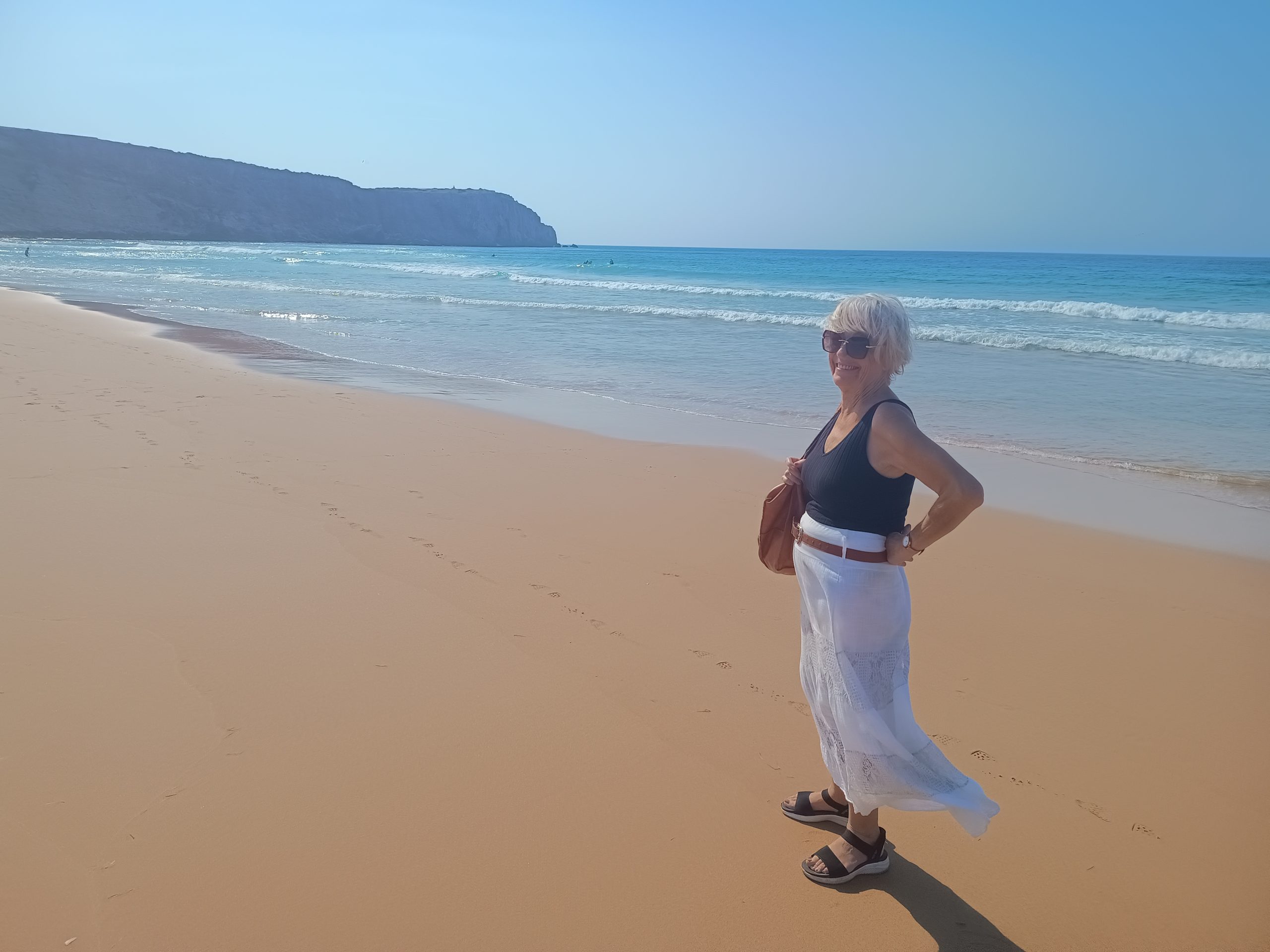
There’s a particular kind of vertigo that comes from having lived somewhere longer than you lived in your own country. Thirty-three years ago I packed two suitcases and moved to Germany, thinking it might be an adventure of a year or two. Fifteen years later I was still there, then ten years unspooled in Ireland, and now eight (and counting) in Portugal. Along the way, “home” stopped meaning a single place and started meaning a collection of habits, comforts, and quiet frustrations scattered across a continent.
Here’s what I’ve learned, country by country, and what still catches me off guard about the difference between European and American life — even after all these years.
Germany: The Fifteen Years That Rewired My Brain
Germany is where I learned that rules aren’t obstacles — they’re a kind of collective agreement, and everyone is expected to hold up their end. My first real culture shock had nothing to do with language and everything to do with Sunday.
The Silence of Sunday
In my first month, I decided to do laundry on a Sunday afternoon. My neighbor knocked on my door — not angry, just baffled — to explain that running a washing machine on a Sunday was against the Hausordnung (house rules), because the noise disturbed the neighborhood’s day of rest. I remember standing there thinking: an entire day where mowing your lawn, vacuuming, and doing chores is essentially a social taboo. In the US, Sunday is just another day to get things done. In Germany, it’s protected, almost sacred, even for people who never set foot in a church. Grocery stores close. Streets go quiet. You either adapt or you spend every Sunday mildly irritated.
Punctuality as a Moral Category
Germans don’t just prefer punctuality — they treat lateness as a small betrayal of trust. I once showed up four minutes late to a dinner party (traffic, genuinely not my fault) and spent the next twenty minutes explaining myself to a host who had clearly recalibrated her opinion of me. In the US, a 15-minute buffer is basically built into the culture. In Germany, if a meeting is at 10:00, you are in the room, seated, ready, at 10:00 — not 10:02.
Bureaucracy as a Way of Life
Nothing prepares you for the Anmeldung (address registration) system, the sheer number of stamped documents required to do anything, or the fact that fax machines were still a legitimate communication method well into the 2010s in some offices. Once you accept that German bureaucracy is a genre of theater — slow, formal, occasionally absurd — it stops being infuriating and starts being almost funny.
What I miss most: the trains that actually mostly worked (before the well-documented decline of Deutsche Bahn), the bread, and a healthcare system where I never once worried about the cost of an ambulance.
Ireland: Ten Years of Warmth and Weather
If Germany taught me structure, Ireland taught me how to have a conversation that goes absolutely nowhere and enjoy every minute of it.
The Chat That Never Ends
Moving from Germany to Ireland was its own culture shock, even within Europe. I’d go into a shop for a loaf of bread and twenty minutes later I’d know the shopkeeper’s opinion on the weather, her son’s football match, and the state of the road works on the N4. In America, small talk with a cashier is a transaction with a light social varnish. In Ireland, small talk is the transaction — the bread is almost incidental.
Pub Culture Is Not “Going Out for Drinks”
Americans go to bars. The Irish go to “the pub,” and the distinction matters. A pub is closer to a community living room — you might see the same eight people there on a Tuesday afternoon just for tea, and no one bats an eye. My local publican knew my order, my dog’s name, and eventually the names of my visiting relatives before I’d even introduced them.
Self-Deprecation as a Love Language
The Irish sense of humor took me years to properly calibrate. Compliments often arrive wrapped in insults, and taking yourself too seriously is close to a cardinal sin. An American colleague of mine once responded earnestly to friendly Irish teasing, and the room went quiet in that particular way that means: you weren’t supposed to defend yourself, you were supposed to insult them back.
The Weather Negotiation
Nobody in Ireland trusts a forecast, plans an outdoor event without a backup plan, or leaves the house without a jacket in July. “Four seasons in one day” isn’t an exaggeration — it’s a Tuesday.
What I miss most: the immediate, unearned warmth of strangers, traditional music sessions that start spontaneously in the corner of a pub, and a slower relationship with time itself.
Portugal: Eight Years and Counting
Portugal has been the gentlest landing of the three — geographically, socially, and emotionally.
The Late, Long Dinner
In the US, dinner at 6 or 7pm is normal, plates are cleared quickly, and the bill often arrives before you’ve asked for it. In Portugal, dinner might start at 8:30 or 9pm, and the idea of a waiter rushing you out is almost offensive to the culture. Meals are a stretch of time you occupy together, not a task to complete. The first time I sat for three hours over dinner with new Portuguese friends, I kept internally panicking that we were “done” and no one was leaving — until I realized that was the entire point.
Bureaucracy, Portuguese Style
Having survived German bureaucracy, I thought I was prepared for anything. Portuguese bureaucracy has a different flavor: less rigid, more improvisational, with a heavy dose of “come back tomorrow, that person is at lunch” (lunch here can generously extend past 90 minutes). It’s frustrating in a completely different way — less rule-bound, more dependent on who you know and how much patience you’re carrying that day.
A Different Relationship with Time and Ambition
The American instinct is to optimize, hustle, and treat leisure as something you earn. In Portugal, a Tuesday afternoon coffee with a friend is not a reward for productivity — it’s simply part of a well-lived life. It took me a couple of years to stop feeling guilty about a two-hour lunch and start seeing it as the actual point.
What surprised me most: how affordable a genuinely high quality of life can be, how central family and multi-generational living still are, and how much slower the pace feels even compared to Ireland.
The Big Differences Between Europe and the US, After 33 Years
A few things have stayed consistent across all three countries, standing out clearly against the backdrop of American life:
- Healthcare isn’t a gamble. In all three countries, a medical emergency has never once threatened my finances. That single fact reshapes how people think about risk, career changes, and even quitting a bad job.
- Vacation is a right, not a favor. Four to six weeks of paid leave, actually taken, with your boss expecting you to be unreachable, is standard. In the US this would be treated as a small miracle.
- Public space is built for people, not cars. Walkable town centers, reliable public transit (Germany’s recent hiccups aside), and cafés that don’t mind if you sit for two hours with one coffee.
- Work is not identity. Nobody in Germany, Ireland, or Portugal has ever asked “so what do you do?” within the first five minutes of meeting me, the way it happens almost immediately in the US. Work is what you do; it’s rarely who you are.
- Regulation feels protective, not just restrictive. Food standards, labor protections, and consumer rights all lean toward protecting the individual rather than the market — something I didn’t fully appreciate until I’d lived without it.
Coming Full Circle
People sometimes ask which country I loved most, as if expat life were a ranking system. It isn’t. Germany gave me structure and my first real sense that a country could function like a well-oiled machine. Ireland gave me warmth, humor, and an appreciation for genuine unhurried connection. Portugal is teaching me, slowly, how to actually enjoy the pace of my own life.
Thirty-three years in, “home” is no longer a single answer. It’s a German instinct for order, an Irish need for a proper chat, and a Portuguese devotion to long dinners — all folded into one very confused, very grateful expat.