
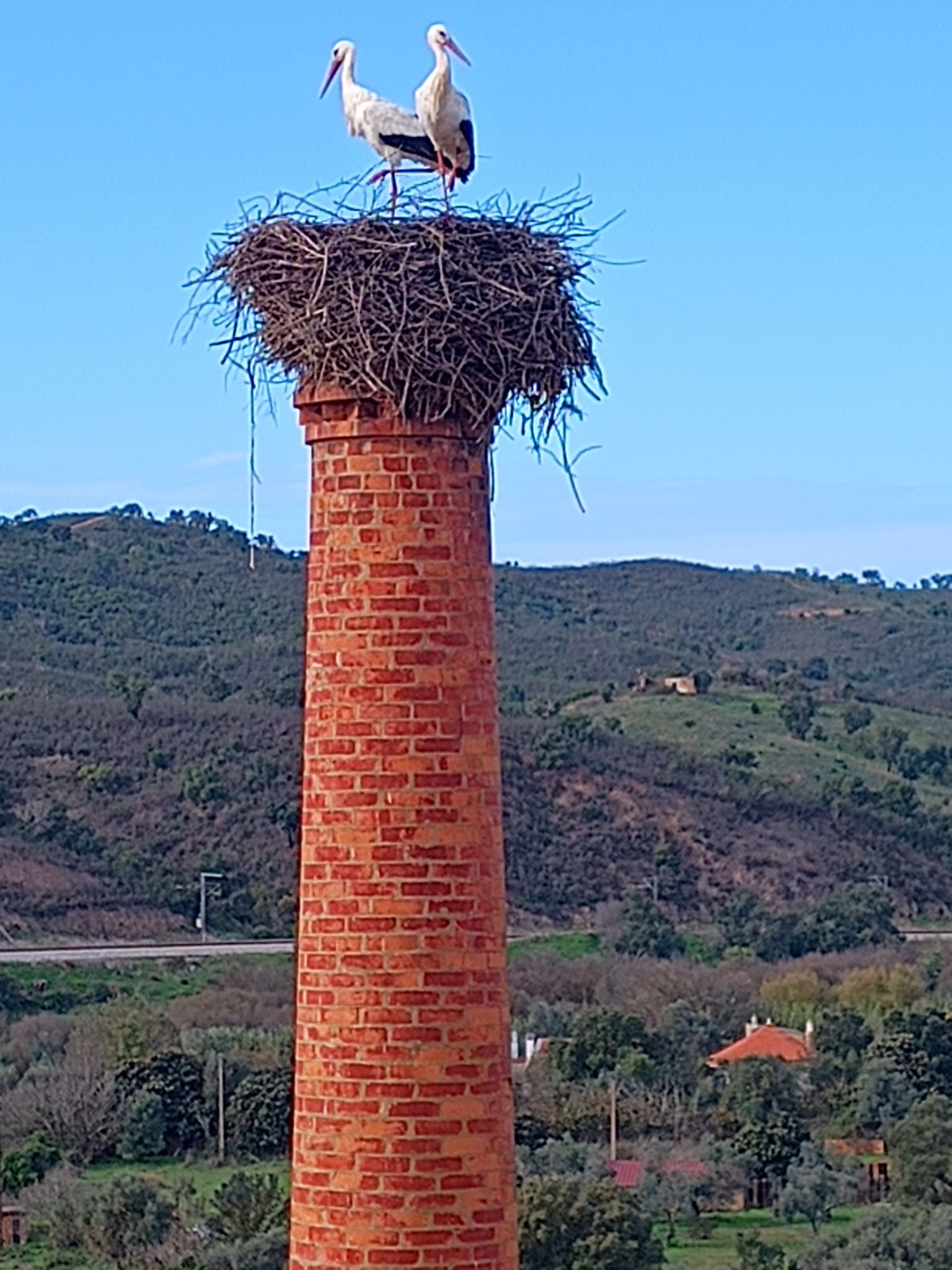
When people hear that we left Ireland for a tiny village in the Algarve, the first question is almost always the same: why not Lisbon, or the coast, or somewhere with an airport nearby? The honest answer is that São Marcos da Serra never had to compete with those places. The moment I found it, it just felt right — in the specific, hard-to-argue-with way that a place sometimes does.
Leaving Ireland, Mid-Pandemic
We moved during Covid, which meant the decision was made under strange conditions. The usual reasons people give for staying put — the routines, the social calendar, the sense that you can’t just leave — had all been stripped away. Ireland had given us a lot, but the pandemic made it painfully clear how much of daily life had shrunk to four walls and a screen. If there was ever a moment to ask “where do we actually want to be,” that was it.
A Feeling I Recognized
I grew up in Southern California, and there’s a particular quality of light and warmth I didn’t know I’d been missing until I found it again — this time in the hills of the Algarve. São Marcos da Serra sits right on the border between the Algarve and Beja, close enough to the mountains to feel wild and close enough to the beaches to never forget the sea is nearby. The dry heat, the slower rhythm of small-town life, the golden late-afternoon light — it all felt less like discovering somewhere new and more like remembering somewhere I’d already known as a kid. Home, it turns out, isn’t always the place you’re from. Sometimes it’s the place that feels like the place you’re from.
I still remember our first entrance into the village. There wasn’t a single dramatic moment I could point to — more a feeling that settled in almost immediately, the sense of oh, there you are that I imagine people describe when they meet the right partner or walk into the right house. I fell in love with the place before I’d even unpacked.
What a Small Village Actually Gives You
There’s a version of the “move abroad” story that’s mostly about escape — leaving behind gray skies, high costs, or a life that had gotten too small. That’s part of it. But the bigger part is what we found once we got here.
São Marcos da Serra is small enough that you’re not anonymous, and that turns out to be the whole point. It’s a genuine mix of Portuguese families who’ve lived here for generations and expats who’ve washed up from all over — and somehow that combination works. There’s rarely a day when I walk into Café Central and don’t find someone to sit and talk with — a neighbor, an old-timer, another transplant working through their own version of this story. Friendships form quickly and easily here, not because everyone is alike, but because in a small community there’s no room for the kind of social distance that swallows people in cities.
And then there’s the nature. Mountains on one side, beaches within easy reach on the other. Mornings that start with birdsong instead of traffic. It’s the kind of setting that makes you actually use your weekends instead of recovering from your week.
The Small Rituals That Add Up
What’s stayed with me most isn’t any single grand feature of village life — it’s the rhythm of small, recurring things. A handful of us meet each week to practice Portuguese together, stumbling through conjugations and laughing at ourselves in equal measure. My husband disappears once a week to play billiards with a group of friends he’s made here, the kind of easy, unremarkable ritual that quietly signals you belong somewhere now. I keep writing, and I’ve taken up painting — mostly trying, with mixed success, to get those storks right.
The Trade-Offs Are Real
I don’t want to make this sound like paradise with no downsides, because it isn’t. Village life in inland Algarve means fewer amenities close by, a slower administrative system, and a language you have to actually commit to learning if you want to be more than a tourist. Isolation from a major city has its costs. But those trade-offs are the price of something I think is increasingly rare: a place where community isn’t something you have to manufacture. It’s just there, if you show up for it.
Why It Was Worth It
Looking back, the decision wasn’t really about Portugal as a country, or even the Algarve as a region. It was about finding a specific village where the geography matched something in my memory, and the community matched something I’d been missing without fully realizing it. Ireland gave us a lot, and Covid gave us the push. But São Marcos da Serra is where we actually chose to land — and years later, that choice still feels right every time I step outside.
As someone who spends my working life as a nature coach — helping people think clearly about the lives they actually want, often with the outdoors as part of the process — and writing about it, too, I’ve come to see this move as one of the better pieces of evidence I have that the work is worth doing. It’s one thing to coach someone through a big decision. It’s another to have made one yourself and watched it hold up, morning after morning, at a café table in a village you now call home.
Every year, I watch for the storks to come back to that chimney across the street. And every year, they do — not because the nest is perfect, but because it’s theirs, and they built a life around it worth returning to. I understand that instinct better than I used to.
If you’re considering a similar move, my honest advice is this: don’t just chase the postcard version of a country. Look for the specific place — often a small, unglamorous one — where the landscape and the people together make you feel like you’ve come home.